CIS LEBANON SECURITY INDEX – July 2 2026
CIS LEBANON SECURITY INDEX – July 2 2026
Thursday, July 2, 2026
🟠 WAR DAY 123 | NETANYAHU, VISITING S. LEBANON: IDF WON’T WITHDRAW “AS LONG AS HEZBOLLAH REMAINS HERE” | FULL TEXT OF ISRAEL-LEBANON SECURITY ANNEX PUBLISHED — CONFIRMS IDF “FREEDOM OF ACTION” | US-IRAN DOHA TALKS CONCLUDE, NEXT ROUND AFTER KHAMENEI FUNERAL (JULY 4–9) | IRAN FM WARNS ISRAEL OVER “TEL AVIV PETS” | BEAUFORT RIDGE DEMOLITION (500 TONS) STILL PENDING
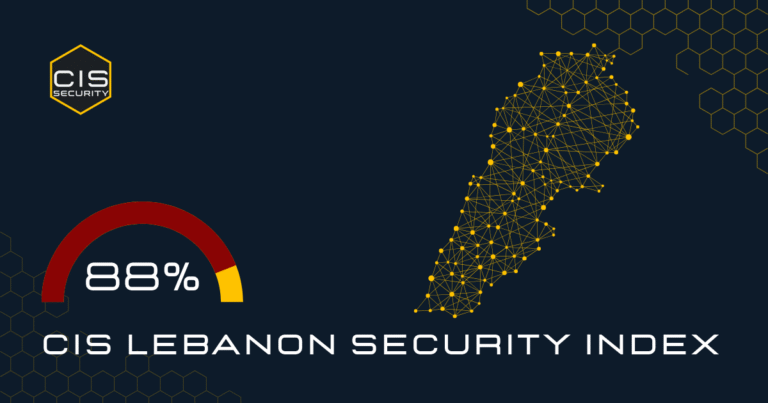
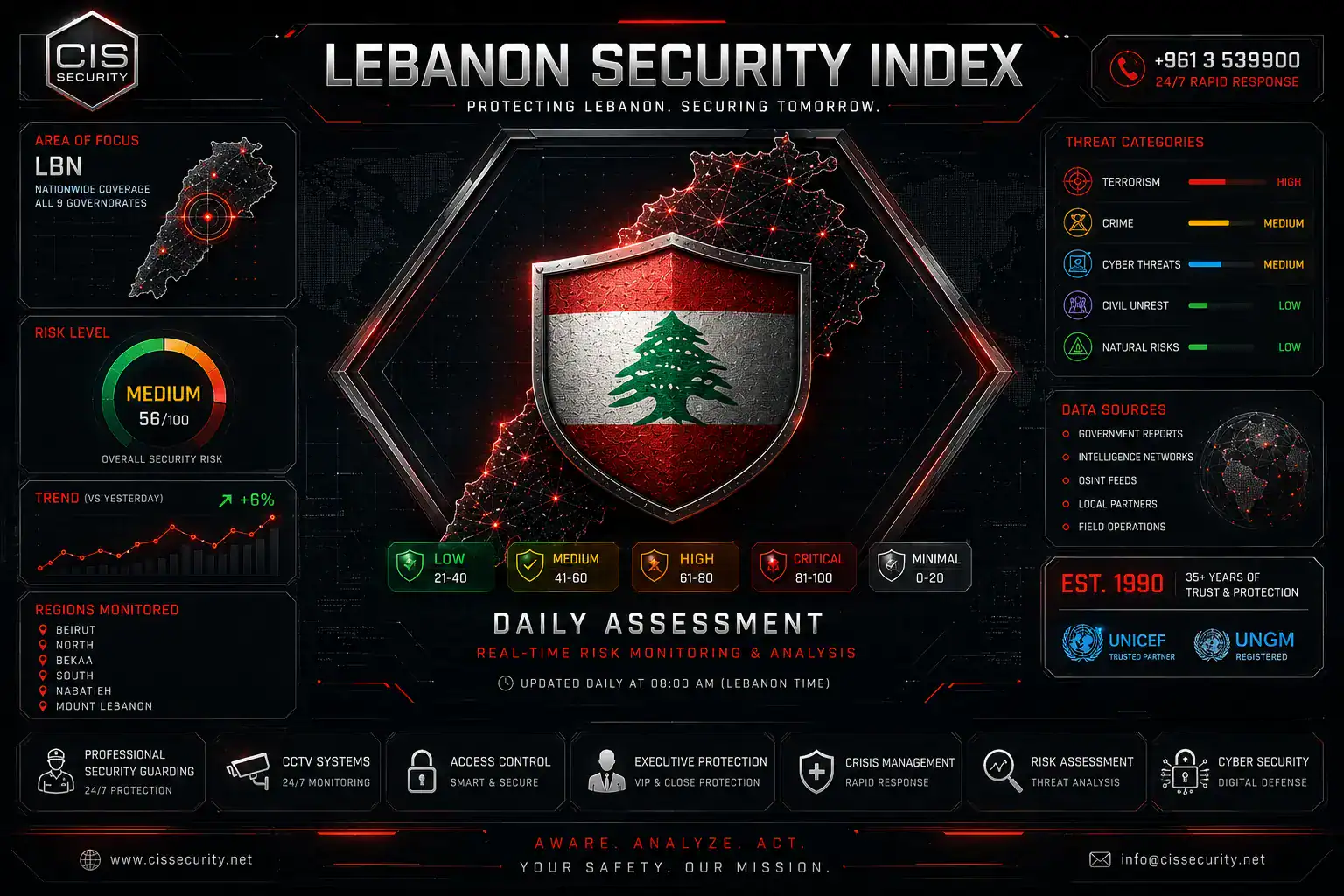
INDEX LEVEL: 🟠 HIGH — ENTRENCHED STALEMATE, DIPLOMATIC PAUSE OVERALL INDEX: 63/100 TREND: ↔️ HOLDING AT PLATEAU, WITH A DIPLOMATIC LULL — Six days after the June 26 framework signing, the military picture in south Lebanon has not meaningfully changed: no new major strikes were reported in the Nabatieh-Mayfadoun corridor over the past 24–48 hours, but this reflects an operational pause rather than any shift in Israeli posture.
Prime Minister Netanyahu personally visited troops in the southern Lebanon security zone on June 30 and, in remarks published July 1, reaffirmed that the IDF “won’t withdraw as long as Hezbollah remains here,” directly echoing Defence Minister Katz’s “not a millimeter” position from the prior week. The full text of the Israel-Lebanon deal’s security annex was published this week, confirming that further IDF withdrawals are conditioned on verified results, not a timetable, and that Israel retains broad “freedom of action” in the security zone.
Separately, the broader US-Iran diplomatic track has entered a scheduled pause: American and Iranian delegations met separately with Qatari and Pakistani mediators in Doha and reported “positive progress,” but agreed to reconvene only after Ali Khamenei’s funeral proceedings, which begin Saturday, July 4, and conclude with burial in Mashhad on July 9 — meaning the most senior US-Iran channel, which indirectly bears on the Lebanon file, is effectively frozen for at least a week.
Iran’s Foreign Minister Araghchi issued a pointed new warning directed at Israel this week, saying that if Trump’s Tel Aviv “pets” are not controlled, “Iran will school them” — notable escalatory rhetoric even amid the nominal diplomatic progress. CIS treats the current lull in Lebanon-specific strikes as fragile and reversible, not as a sign of de-escalation.
⛔ EXECUTIVE SUMMARY — THURSDAY JULY 2, 2026 (WAR DAY 123)
NETANYAHU, IN PERSON IN SOUTH LEBANON, REINFORCES KATZ’S “NOT A MILLIMETER” LINE
Visiting troops stationed in the southern Lebanon security zone on June 30 — a trip publicly reported on July 1 — Prime Minister Benjamin Netanyahu told soldiers that “if you identify a threat to your security, to your lives, or to the lives of your soldiers — act. Do not wait. Act. That is an ironclad directive.” Netanyahu insisted Israel and Lebanon are “sovereign states that want peace” and that both governments want Hezbollah out of the picture, while separately stating plainly that the IDF will not withdraw from its positions “as long as Hezbollah remains here.”
This is the second time in a week that a top Israeli official has personally, unambiguously ruled out near-term withdrawal beyond the two narrow pilot areas — Katz said much the same on June 29 (“not a millimeter”), and Netanyahu’s in-person visit to the security zone, flanked by Katz and Deputy IDF Chief of Staff Tamir Yadai, underscores that this is now settled government messaging rather than a single minister’s framing.
CIS assessment: The consistency and personal nature of these statements — delivered from inside the security zone itself — signals that Israel intends the current buffer-zone posture to be durable for the foreseeable future, regardless of the diplomatic architecture built since June 26.
FULL TEXT OF THE SECURITY ANNEX CONFIRMS: WITHDRAWAL IS RESULTS-BASED, NOT TIME-BASED
The Times of Israel this week published the full text of the security annex to the Israel-Lebanon framework deal, headlined around the concept of “eventual IDF redeployment from Lebanon.” Sourcing on the annex confirms two points CIS has been flagging since the June 26 signing:
- Further IDF withdrawals beyond the initial two pilot areas are explicitly conditioned on verified Lebanese Armed Forces performance in dismantling Hezbollah infrastructure — not on any fixed calendar. There is no committed date by which a broader pullback must occur.
- The annex preserves IDF “freedom of action” inside the security zone, meaning Israel retains the right to strike targets it deems threats regardless of the formal ceasefire architecture — consistent with the near-daily pattern of strikes CIS has documented throughout the post-framework period.
CIS assessment: This published text removes any remaining ambiguity: the framework agreement formalizes an open-ended Israeli military presence and unilateral strike authority in south Lebanon, with Lebanese sovereignty restored only incrementally and only after Israeli verification standards are met. This structurally matches the pattern CIS has tracked since the agreement was signed.
THE DOHA TRACK PAUSES FOR KHAMENEI’S FUNERAL — A WEEK-LONG DIPLOMATIC GAP
US envoys Steve Witkoff and Jared Kushner concluded a round of indirect talks with Iranian counterparts in Doha this week, mediated separately by Qatar and Pakistan. Qatar’s foreign ministry said “positive progress” was made on issues related to the Islamabad memorandum of understanding, building on the prior Lake Lucerne summit in Switzerland — but confirmed that no direct US-Iran meeting occurred; both sides met only with mediators. Iran’s Foreign Ministry had said on July 1 that “no meeting at any level with the American side has been scheduled for the coming days.”
Critically, the parties agreed that the next round of talks will not occur until after the funeral processions for former Supreme Leader Ali Khamenei conclude. Funeral ceremonies begin Saturday, July 4, and run for several days, concluding with burial in Khamenei’s hometown of Mashhad on July 9. This creates an effective one-week pause in the most senior US-Iran diplomatic channel — a channel that indirectly shapes the pace of any further movement on the Lebanon file, given that Qatari mediators have explicitly said Lebanon remains bundled into the broader regional talks agenda.
Separately, Tehran claimed the two sides had agreed on a partial release of Iran’s frozen funds; US officials denied any such agreement was reached — the latest instance of the two sides publicly disputing what, if anything, was actually agreed in a given round of talks, a pattern CIS has observed repeatedly since the framework signing.
On the Strait of Hormuz: Iran’s chief negotiator, parliament speaker Mohammad Bagher Ghalibaf, stated flatly that the sovereignty of the Strait of Hormuz lies with Iran and Oman, and that Iran intends to impose tolls on shipping starting in mid-August, when the 60-day negotiating period established by the MOU expires. Iran also separately denied that IAEA inspectors have been, or will be, granted access to the nuclear sites bombed by the US at Fordow, Natanz, and Isfahan, calling reports of such access “false.”
CIS assessment: The combination of a week-long diplomatic pause, continued public disagreement over what was actually agreed, and Iran’s explicit intent to unilaterally impose Hormuz tolls in six weeks’ time all point to a fragile, incomplete diplomatic architecture — one that could accelerate toward resolution or fracture toward renewed escalation once the funeral period ends and talks resume.
IRANIAN FM’S POINTED WARNING TO ISRAEL — “IRAN WILL SCHOOL THEM”
In notably escalatory rhetoric that stands somewhat apart from the “positive progress” language coming out of Doha, Iranian Foreign Minister Abbas Araghchi warned this week that if Israeli actions (which he characterized as Trump’s Tel Aviv “pets”) are not controlled, “Iran will school them.” This is a sharper formulation than Iran’s prior warnings and comes from Iran’s chief diplomat rather than a military figure, suggesting the rhetorical temperature has not cooled even as technical negotiations continue.
Separately, in domestic Israeli politics, Prime Minister Netanyahu claimed in a Channel 14 interview that Iran had “already obtained” an atomic bomb before Israel’s campaign — a claim his own political rivals, including former IDF chief Gadi Eisenkot and former PM Naftali Bennett, immediately and publicly called a “complete lie.” CIS notes this claim is not corroborated by any independent source and appears most plausibly tied to domestic Israeli election messaging (Netanyahu is in the midst of an active campaign ahead of Israel’s next election) rather than a verified intelligence assessment, but flags it given its potential to affect the broader escalation calculus if amplified.
DRONE STRIKE ON IRANIAN KURDISH OPPOSITION CAMP IN IRAQ — ATTRIBUTION UNCLEAR
An explosive-laden drone struck a camp belonging to an Iranian Kurdish opposition group in the Koysanjaq district east of Erbil, in Iraq’s Kurdistan region, causing a fire. Iraqi security sources reported the strike; there is no confirmed attribution and no immediate casualty figures. CIS is monitoring this as a potential indicator of expanding cross-border activity tied to the Iran conflict’s periphery, though it does not directly affect the Lebanon security picture at this time.
US REPORTEDLY WEIGHING TROOP PULLBACK FROM SAUDI ARABIA AMID STRAINED TIES
A report indicates the US is considering pulling troops from Saudi Arabia as bilateral ties sour over the Iran war — reportedly triggered in part by Riyadh’s initial refusal to grant the US use of bases critical to a Hormuz ship-escort operation, and by Saudi irritation that Secretary of State Rubio skipped Riyadh on a recent Gulf tour. Separately, a report indicates Trump had weighed a full return to war against Iran but currently prefers continued diplomatic efforts. Both data points reinforce CIS’s assessment that the regional security architecture remains unsettled and that US regional posture could shift quickly depending on how the post-funeral talks proceed.
📅 KEY TIMELINE — JUNE 30–JULY 2
| Date | Event |
|---|---|
| June 30 | Netanyahu visits IDF troops in the southern Lebanon security zone, tells them not to hesitate to act against threats; Katz and Deputy Chief of Staff Yadai also present. Witkoff and Kushner meet Qatari PM in Doha. UN pushes for a post-UNIFIL successor force over Israeli objections |
| July 1 | Iran says no meeting at any level scheduled with US side “for coming days.” Full text of Israel-Lebanon security annex published, confirming results-based (not time-based) withdrawal and continued IDF “freedom of action.” Netanyahu, in Channel 14 interview, says lesson of Oct. 7 is buffer zones must be established beyond Israel’s borders; separately claims pursuit of “total victory” against Iran and its proxies “never ends” |
| July 2 (today) | Qatar confirms “positive progress” made in Doha on Islamabad MOU issues, but no direct US-Iran meeting; next round deferred until after Khamenei funeral (July 4–9, burial in Mashhad). Iranian FM Araghchi warns Israel over its “Tel Aviv pets.” Netanyahu claims Iran “already obtained” atomic bomb; political rivals call it a lie. Explosive drone hits Iranian Kurdish opposition camp near Erbil, Iraq. Reports emerge of US weighing Saudi troop pullback amid strained ties |
🗺️ JULY 2 GOVERNORATE-BY-GOVERNORATE ASSESSMENT
| Governorate | Status | Detail |
|---|---|---|
| South Lebanon — Nabatieh / Mayfadoun | 🟠 ELEVATED — NO NEW MAJOR STRIKE REPORTED | First 24–48hr period since the framework signing without a newly reported strike in this specific corridor; CIS treats this as an operational pause, not a policy shift |
| South Lebanon — Beaufort Ridge / Ali Taher | 🔴 DEMOLITION STILL PENDING | Katz’s announced 500-ton explosives demolition has not yet been confirmed as carried out; remains an active, scheduled military operation |
| South Lebanon — two pilot withdrawal areas | 🟡 TRANSITIONING, RESULTS-CONDITIONED | Published annex confirms handover is conditioned on verified LAF performance dismantling Hezbollah infrastructure, not a calendar date |
| South Lebanon (general) | 🟠 ELEVATED — ENTRENCHED, “FREEDOM OF ACTION” CONFIRMED | Netanyahu and published annex both confirm indefinite IDF presence and strike authority pending Hezbollah disarmament |
| Beqaa / Bekaa Valley | 🟠 ELEVATED | No major new strikes specifically reported today |
| South Beirut / Dahiyeh | 🟠 ELEVATED — POLITICAL TENSION (WATCHING FOR RENEWED PROTEST) | No new protest activity specifically reported today; underlying tension from prior week’s demonstrations has not resolved |
| Beirut (general) | ✅ CALM | Normal operations; high political/diplomatic attention continues |
| Mount Lebanon | ✅ CALM | Normal operations |
| North Lebanon | ✅ CALM | Normal operations |
| Akkar | ✅ CALM | Normal operations |
🚗 JULY 2 TRAVEL STATUS
| Zone | Status |
|---|---|
| Nabatieh / Mayfadoun corridor | 🟠 ELEVATED — no new strike in past 24–48hrs, but pattern could resume without notice; continue avoiding |
| Beaufort Ridge / Ali Taher | 🔴 MAJOR DEMOLITION STILL PLANNED (500 tons explosives) — avoid; expect a significant event without further specific warning |
| Buffer zone (general) | ❌ ACTIVELY ENFORCED — IDF “freedom of action” formally confirmed in published annex text; do not approach |
| Two pilot withdrawal areas | 🟡 STATUS UNCLEAR — handover remains results-conditioned; do not assume safety absent independent verification |
| South Lebanon (general) | 🟠 CONTINUE CAUTION |
| Bekaa Valley | 🟠 ELEVATED |
| Dahiyeh / South Beirut | 🟠 ELEVATED — monitor for renewed protest activity |
| Beirut (non-Dahiyeh) | ✅ Calm |
| Mount Lebanon | ✅ Calm |
| North Lebanon | ✅ Calm |
| Masnaa Border Crossing | ✅ OPEN |
| Rafic Hariri Airport | ✅ OPERATING |
| Strait of Hormuz | 🟡 VOLATILE — Iran asserts sovereignty with Oman, plans unilateral tolls mid-August; shipping status remains contingent on continued diplomatic calm |
📊 JULY 2 STATISTICS — WAR DAY 123
| Metric | Figure | Source |
|---|---|---|
| Lebanon killed (cumulative, per OCHA/Lebanese government) | 4,230+ | UN OCHA update cited in UN Security Council Report, as of June 25 |
| Lebanon injured (cumulative) | 12,179+ | UN OCHA update, as of June 25 |
| Lebanon displaced (cumulative) | Over 1 million (>20% of population) | Wikipedia / UN tracking |
| UNIFIL peacekeepers killed since March 2 | 7 | UN Security Council Report |
| Khamenei funeral period | July 4–9 (burial in Mashhad July 9) | Times of Israel |
| US-Iran MOU 60-day clock | Day 15 of 60 (signed June 17); Hormuz tolls threatened at expiry (~mid-August) | CIS calculation / Iranian officials |
| Total war duration | 123 days (since March 2) | CIS calculation |
🔑 KEY STATEMENTS — JUNE 30–JULY 2, 2026
| Actor | Statement |
|---|---|
| PM Netanyahu | (Visiting south Lebanon) “If you identify a threat to your security, to your lives, or to the lives of your soldiers — act. Do not wait. Act. That is an ironclad directive.” IDF “won’t withdraw as long as Hezbollah remains here.” Israel and Lebanon are “sovereign states that want peace.” Separately claimed pursuit of “total victory” against Iran and its proxies “never ends,” and that Iran had “already obtained” an atomic bomb (disputed by political rivals) |
| Iranian FM Abbas Araghchi | If Trump’s Tel Aviv “pets” aren’t controlled, “Iran will school them” |
| Iran’s chief negotiator, Speaker Ghalibaf | “The sovereignty of the Strait of Hormuz lies with Iran and Oman”; denies IAEA inspectors have or will be granted access to bombed nuclear sites; confirms Iran intends to impose Hormuz tolls in mid-August |
| Iran Foreign Ministry spokesperson Esmaeil Baghaei | “No meeting at any level with the American side has been scheduled for the coming days” |
| Qatar FM spokesperson Majed Al Ansari | “Positive progress [was] made on issues related to the Islamabad Memorandum of Understanding,” with next round to follow Khamenei’s funeral |
| President Trump | “The denuclearization of Iran is moving along well.” “We hit them very hard for three nights, but we’re getting along very well” |
| Eisenkot / Bennett (Israeli opposition) | Call Netanyahu’s claim that Iran “already obtained” a nuclear bomb a “complete lie” |
🛡️ CIS SECURITY — JULY 2 ASSESSMENT & GUIDANCE
Trusted Security Excellence Since 1990 | “Because Your Safety Isn’t Optional”
CIS POSTURE: LEVEL 4 — HIGH ALERT (Maintained)
CIS maintains Level 4 today. While the past 24–48 hours have not produced a newly reported strike in the Nabatieh-Mayfadoun corridor specifically, this reflects a temporary operational lull rather than any change in the underlying posture. Netanyahu’s personal visit to the security zone, the published security annex confirming indefinite Israeli “freedom of action,” and the week-long pause in the senior US-Iran diplomatic channel (pending Khamenei’s funeral) together indicate a situation that remains fundamentally unresolved and could shift quickly in either direction once high-level talks resume after July 9.
WHY THIS WEEK’S DEVELOPMENTS MATTER FOR YOUR SAFETY
- The published security annex removes any remaining doubt about the legal basis for continued Israeli operations. “Freedom of action” language, confirmed in the actual signed text rather than just official statements, means CIS should not expect any change in the pattern of strikes based on the diplomatic framework alone.
- A pause in reported strikes is not the same as a ceasefire holding. CIS has observed repeatedly since June 26 that lulls of a day or two have been followed by renewed strikes without additional warning. Residents and CIS clients with interests in South Lebanon should not interpret today’s quieter news cycle as a signal of durable calm.
- The Beaufort Ridge demolition (500 tons of explosives) remains an outstanding, scheduled event. Its absence from the news over the past several days does not mean it has been cancelled — CIS continues to advise expecting a significant demolition event in this area without further specific notice.
- The week-long gap in senior US-Iran diplomacy (through July 9) removes an important channel for de-escalation during this period. Any Lebanon-specific friction that arises during this week will have to be managed through lower-level or Lebanon-specific channels rather than the broader US-Iran track, which CIS assesses as a modest but real added risk factor through the coming week.
ZONE-BY-ZONE GUIDANCE — JULY 2
NABATIEH / MAYFADOUN: Continue to avoid. Absence of a newly reported strike in the past 24–48 hours should not be read as a sign of safety; this corridor has seen the most consistent strike activity of any area since the framework signing and could resume at any time.
BEAUFORT RIDGE / ALI TAHER: Avoid. The 500-ton explosives demolition remains outstanding and could occur without further specific warning.
THE TWO PILOT WITHDRAWAL AREAS: Monitor for confirmed Lebanese Army deployment. The published annex text confirms withdrawal remains conditioned on verified results, not a calendar date — do not assume safety until independently verified.
DAHIYEH: Maintain elevated caution. No new protest activity was specifically reported today, but the underlying tension from the prior week’s demonstrations has not resolved, and CIS continues to monitor for renewed activity, particularly around the airport road.
BEKAA VALLEY: No new major strikes reported today specifically; maintain elevated caution given the area’s recent history.
BEIRUT (general), MOUNT LEBANON, NORTH LEBANON, AKKAR: Calm, normal operations continue.
WHAT CIS IS WATCHING — THE WEEK AHEAD
- Does the operational lull in Nabatieh-Mayfadoun hold, or does the pattern of near-daily strikes resume? A continued pause through the coming days would be a genuinely notable development; a resumption would confirm CIS’s assessment that this is a temporary lull rather than a shift.
- Does the Beaufort Ridge demolition (500 tons of explosives) occur during this period, and does it trigger any Hezbollah response?
- What emerges from US-Iran talks once they resume after Khamenei’s funeral concludes on July 9 — and does Lebanon feature explicitly, given Qatar’s confirmation that Lebanon remains bundled into the broader regional talks agenda?
- Does Iran’s rhetorical escalation (Araghchi’s “Iran will school them” warning) translate into any concrete action, or remain at the level of diplomatic signaling?
- Does the Lebanese Army’s stated intent to deploy “up to the border” (per President Aoun’s comments to CENTCOM last week) produce any independently verified movement during this quieter operational period?
📞 EMERGENCY CONTACTS — JULY 2, 2026
CIS Security 24/7: +961-3-539900 | info@cissecurity.net | www.cissecurity.net Lebanese Army South Lebanon Liaison: +961-8-802-510 US Embassy Emergency: +1-202-501-4444 | BeirutACS@state.gov Lebanese Red Cross: 1760 Civil Defence: 125 ISF: 112 National Mental Health Lifeline: 1564 (24/7 — confidential)
⚠️ FINAL ASSESSMENT — WAR DAY 123, JULY 2, 2026
A quieter 48 hours in south Lebanon’s strike pattern coincides with a week-long pause in the senior US-Iran diplomatic channel — and CIS reads both as temporary, not as signs of resolution.
This week’s most consequential development for Lebanon may not have been a strike at all, but a document: the published text of the Israel-Lebanon security annex confirms, in writing, what Katz and Netanyahu have each said aloud in recent days — that further Israeli withdrawal is conditioned on verified results rather than any fixed date, and that the IDF retains broad freedom of action inside the security zone regardless of the ceasefire’s formal existence. Netanyahu’s personal visit to troops stationed in south Lebanon, and his direct instruction to “act, do not wait” against any perceived threat, reinforces that this is now settled, top-level Israeli policy rather than rhetoric from a single ministry.
Meanwhile, the broader regional diplomatic track — on which any further movement on Lebanon partly depends, per Qatar’s own framing — has entered a scheduled gap. US and Iranian delegations met only with mediators in Doha this week, reported “positive progress” without specifics both sides can agree on, and will not reconvene until after Ali Khamenei’s funeral concludes on July 9. In the interim, Iran’s own foreign minister delivered pointedly escalatory rhetoric toward Israel, even as his negotiators spoke of progress in Doha — a reminder that the diplomatic and rhetorical tracks are not always moving in the same direction at the same time.
One hundred and twenty-three days into this war, Lebanon finds itself in a rare quiet stretch that CIS assesses as fragile rather than settled. The underlying structure — an open-ended Israeli security-zone presence, a still-pending major demolition at Beaufort Ridge, an unresolved domestic Lebanese political rift over the framework agreement, and a week-long gap in the highest-level diplomatic channel — has not changed. CIS maintains Level 4 — High Alert — and continues to advise caution in south Lebanon, particularly around the Nabatieh-Mayfadoun-Beaufort corridor, while monitoring closely for how the picture develops once US-Iran talks resume after July 9.
+961-3-539900 | info@cissecurity.net | cissecurity.net CIS Security — Because Your Safety Isn’t Optional — Est. 1990
CIS Lebanon Security Index™ | Thursday, July 2, 2026 | WAR DAY 123 Sources: Times of Israel liveblog July 2, 2026 (Qatar/Al Ansari confirms “positive progress” on Islamabad MOU issues, no direct US-Iran meeting, next round after Khamenei funeral July 4–9, burial Mashhad July 9; explosive-laden drone strike on Iranian Kurdish opposition camp near Erbil, Iraq; man shot dead in Haifa);
Times of Israel liveblog July 1, 2026 (Iran Foreign Ministry spokesperson Esmaeil Baghaei: “No meeting at any level… scheduled for the coming days”; Iran’s chief negotiator Ghalibaf on Hormuz sovereignty and mid-August tolls; Trump “denuclearization… moving along well” remarks aboard Air Force One;
.Netanyahu visiting south Lebanon “won’t withdraw as long as Hezbollah remains here,” “act, do not wait” instruction to troops); Times of Israel, “Visiting south Lebanon, PM says IDF won’t withdraw ‘as long as Hezbollah remains here'” (June 30–July 1, 2026); Times of Israel, “‘Eventual IDF redeployment from Lebanon’: Full text of Israel-Lebanon deal security annex” and “Annex in Israel-Lebanon deal conditions further IDF withdrawals on results, not time” (referenced June 30–July 1, 2026); Times of Israel,
“Iranian FM: If Trump’s Tel Aviv ‘pets’ aren’t controlled, ‘Iran will school them'” (July 2, 2026); Times of Israel, “Netanyahu claims he saved Israel from destruction as Iran ‘already obtained’ atomic bomb” (July 2, 2026, and Eisenkot/Bennett response);
Times of Israel, “US reportedly mulls pulling troops from Saudi Arabia as ties sour over Iran war” and “Trump weighed return to full war against Iran, but prefers diplomatic efforts – report” (July 1–2, 2026); Times of Israel, “Iran’s chief negotiator: IAEA inspectors cannot visit nuclear sites bombed by US” (July 2, 2026); UN Security Council Report, “Lebanon, July 2026 Monthly Forecast” (OCHA figures 4,230 killed, 12,179 injured as of 25 June update; UNIFIL 7 peacekeepers killed since March 2; France/Italy post-UNIFIL coalition); Wikipedia, “2026 Lebanon war,” “Timeline of the 2026 Lebanon War,” and “2026 Israel–Lebanon ceasefire” (updated July 2, 2026 — cumulative casualty and displacement figures, ceasefire terms).
All Lebanon casualty figures from Lebanese Ministry of Public Health, UN OCHA, and Wikipedia tracking. All diplomatic and military statements from named officials or sourced reporting, primarily Times of Israel liveblogs June 30–July 2, 2026. Index compiled: Thursday, July 2, 2026 — Beirut time.
CIS SECURITY
Because Your Safety Isn’t Optional
Lebanon’s only daily security intelligence platform · Updated daily at 8 AM
Daily Intelligence Dashboard LIVE RAGEX Intelligence Partner FEATUREDCIS Security · Beirut, Lebanon · ISO Certified