CIS LEBANON SECURITY INDEX – July 15 2026
CIS LEBANON SECURITY INDEX – July 15 2026
🇱🇧 CIS LEBANON SECURITY INDEX™
Wednesday, July 15, 2026
🔴 WAR DAY 136 | TRUMP PERSONALLY PRESSED NETANYAHU TO WITHDRAW FROM LEBANON, SYRIA — NETANYAHU PUSHED BACK, CITING “SECURITY ZONES” | 6TH ROUND OF ROME TALKS UNDERWAY; FM SA’AR: “WE ARE READY TO MOVE FORWARD” ON PILOT ZONES | US REIMPOSES IRAN NAVAL BLOCKADE; TEHRAN VOWS “DECISIVE RESPONSE” AFTER 7 KILLED | ANALYSTS WARN IRAN MAY ORDER HOUTHIS TO CLOSE BAB EL-MANDEB STRAIT
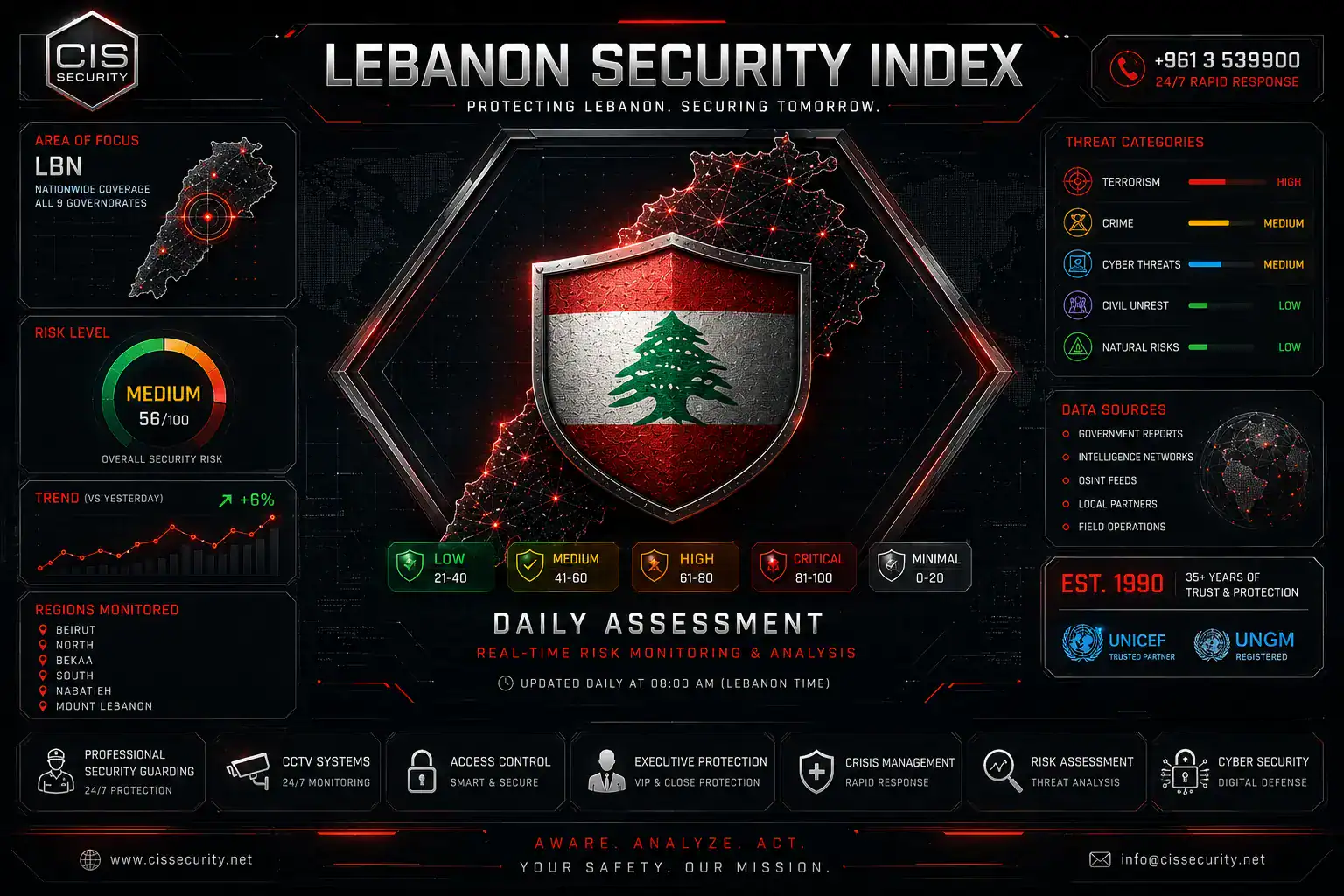
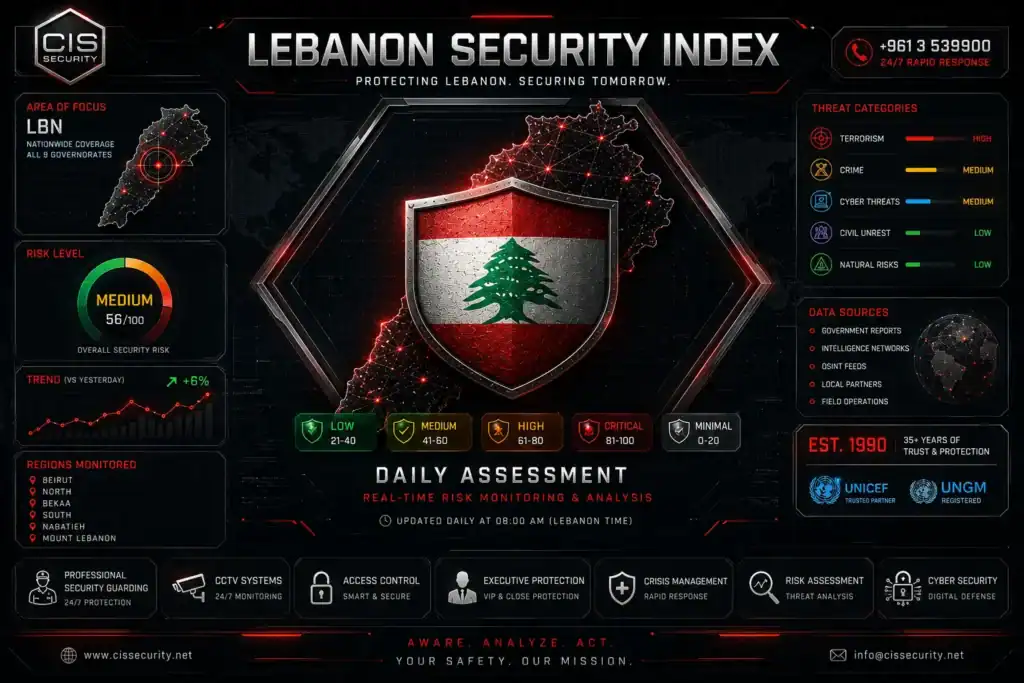
INDEX LEVEL: 🔴 CRITICAL — GENUINE LEBANON DIPLOMATIC MOVEMENT AMID UNRESOLVED, SEVERE REGIONAL WAR OVERALL INDEX: 84/100 TREND: ↔️ MIXED — REAL DIPLOMATIC MOVEMENT ON LEBANON, BUT NO CHANGE ON THE GROUND, WHILE THE BROADER GULF WAR REMAINS SEVERE — Today brings the most significant Lebanon-specific diplomatic development in over a week: Axios reports that President Trump personally told Prime Minister Netanyahu, in a phone call last Thursday, to begin withdrawing Israeli forces from southern Syria and to take similar steps in Lebanon, telling him bluntly: “They don’t want you there. You should redeploy.” Netanyahu reportedly pushed back, with his office confirming he stressed “the need for security zones along Israel’s borders” — a direct, personal disagreement between the two leaders that IDF sources say caught even the military by surprise. This comes as the sixth round of Israel-Lebanon talks got underway in Rome on Tuesday, with Israel’s Foreign Minister Gideon Sa’ar striking a notably more optimistic tone than Israel’s ambassador did on Monday, saying “we are ready to move forward implementing these two pilot zones” and expressing hope the Rome round will “promote it.” However, CIS notes the concrete reality has not changed: it has now been two and a half weeks since Israel agreed to withdraw from the pilot zones, and no withdrawal has occurred, with the two sides still disputing who should verify the zones are clear of Hezbollah weapons — Israel wants the IDF itself to make that determination, while Lebanon insists the US military should be the judge. On the broader regional front, the picture remains severe: the US reimposed its naval blockade of Iranian ports on July 14, Iran has vowed a “decisive response” after 7 people were reportedly killed in the latest US strikes, Jordan intercepted three Iranian missiles overnight, and analysts now warn Iran may be weighing what one report calls the “nuclear option” of directing the Houthi movement to close the Bab el-Mandeb Strait — which would extend the shipping threat far beyond the Gulf into global trade routes more broadly. CIS assesses today’s Lebanon-specific developments as a genuine, if still unrealized, positive signal, set against a regional backdrop that remains extremely volatile.
⛔ EXECUTIVE SUMMARY — WEDNESDAY JULY 15, 2026 (WAR DAY 136)
TRUMP PERSONALLY PRESSES NETANYAHU ON LEBANON WITHDRAWAL — AND IS REBUFFED
According to Axios, citing American and Israeli officials, President Trump told Prime Minister Netanyahu during a phone call last Thursday (July 9) that Israel’s military presence in southern Syria was creating tensions that could lead to further escalation, telling him: “They don’t want you there. You should redeploy.” Trump reportedly made a similar, direct request regarding Lebanon. This occurred the day after Trump met Syrian President Ahmed al-Sharaa on the sidelines of the NATO summit in Turkey, connecting the call to the administration’s broader push for regional de-escalation.
Netanyahu pushed back during the call, with the Prime Minister’s Office confirming afterward that he “raised the need for security zones along Israel’s borders.” Notably, IDF sources told the Jerusalem Post the report “took them by surprise” and that they were “unfamiliar with the reported phone call” — suggesting either a genuine communication gap between Israel’s political and military leadership, or an attempt by defense officials to distance themselves from the substance of the exchange. Separately, Axios reports Trump has previously used blunt language behind closed doors about Netanyahu’s handling of the Lebanon strikes specifically, and describes a “widening rift” between the two leaders on this issue.
CIS assessment: This is a materially significant development that CIS had not previously had visibility into. A direct, personal request from the US president — delivered nearly a week ago but only now reported — indicates the pressure on Israel to withdraw from Lebanon (and Syria) is coming from the very top of the US government, not merely mid-level State Department officials as CIS has tracked previously. Netanyahu’s pushback, and the reported institutional surprise within the IDF, both suggest this remains a genuinely contested and unresolved question within Israel’s own government, rather than a settled policy shift.
SIXTH ROUND OF ROME TALKS UNDERWAY; SA’AR STRIKES OPTIMISTIC NOTE
The sixth round of Israel-Lebanon talks began in Rome on Tuesday, July 14, with US mediators meeting Israeli and Lebanese diplomatic teams to discuss implementation of the framework agreement signed June 26. Israel’s Foreign Minister Gideon Sa’ar told reporters in Jerusalem: “We are ready to move forward implementing these two pilot zones. I hope and tend to believe that this round of discussions in Rome will promote it.”
However, CIS notes this optimistic framing sits in tension with the reality on the ground: it has now been two and a half weeks since Israel first agreed to withdraw from the pilot zones, and no withdrawal has occurred, a delay that has itself slowed the broader talks. The specific procedural dispute blocking progress has now been clarified: Israeli officials insist the IDF must itself verify that the pilot zones are clear of Hezbollah weapons and military infrastructure before withdrawing, while Lebanese officials maintain that the US military — not Israel — should serve as the neutral verifying party.
CIS assessment: Sa’ar’s comments represent a more optimistic tone than Ambassador Leiter’s framing on Monday, which CIS reported as effectively conditioning withdrawal on full Hezbollah disarmament with no defined timeline. This may reflect either a genuine softening of Israel’s position under Trump’s direct pressure, or simply different officials offering different public framing of the same underlying, unresolved dispute. CIS treats the specific verification-authority disagreement (IDF self-verification vs. US military verification) as the concrete, resolvable-in-principle issue to watch — if this specific procedural question is resolved in Rome, it could unlock the broader withdrawal process; if not, expect continued delay regardless of positive rhetoric.
US REIMPOSES NAVAL BLOCKADE; TEHRAN VOWS “DECISIVE RESPONSE” AFTER 7 KILLED
The US military reimposed its naval blockade of Iranian ports on July 14 at 4pm, in direct response to Iran’s continued attacks on commercial shipping in the Strait of Hormuz. This blockade was first imposed in mid-April, then lifted in mid-June, the day after the original interim US-Iran deal was signed — its reimposition is a concrete marker of just how far the situation has deteriorated from that brief period of relative calm. Iran responded by vowing that “not a single drop” of oil or gas will depart the region if the US continues what it called “evil actions.”
Today, Tehran vowed a “decisive response” after Iranian sources said 7 people were killed in the latest US strikes on an Iranian military base — a further, separate casualty figure from the cumulative tolls CIS has tracked over recent days. Jordan’s military intercepted 3 Iranian missiles overnight, continuing the pattern of cross-border missile activity CIS has tracked since Saturday’s six-country attack. Iran’s IRGC maintains that the Strait of Hormuz will remain shut until the US “ends its aggression.” President Trump, for his part, demanded Iran “get to the table and negotiate,” warning “you better make a deal,” while separately claiming his negotiators had just spoken with Tehran — a characteristically contradictory combination of escalatory and conciliatory messaging that CIS has now observed as a recurring pattern from the US president throughout this conflict.
Separately, Trump has reportedly backtracked from an earlier proposal to charge a 20% toll for securing passage through the Strait of Hormuz — a notable reversal of the position Iran’s foreign minister had mocked earlier this week.
CIS assessment: The reimposition of the naval blockade, combined with continued mutual strikes and new casualty figures, confirms the broader US-Iran conflict remains in an active, unresolved state, consistent with CIS’s assessment throughout this past week. Trump’s mixed signals (demanding negotiation while also threatening further strikes) continue to make it difficult to assess the administration’s actual near-term intentions with confidence.
ANALYSTS WARN IRAN MAY ORDER HOUTHIS TO CLOSE BAB EL-MANDEB STRAIT
Analysts cited by the Times of Israel say Tehran may be considering what is described as the “nuclear option” of directing Yemen’s Houthi movement to close the Bab el-Mandeb Strait — the narrow waterway connecting the Red Sea to the Gulf of Aden, separate from and in addition to the Strait of Hormuz. Such a move would extend the current shipping-security crisis well beyond the Gulf, threatening global trade and energy supply routes more broadly, given the Bab el-Mandeb’s role as a critical corridor for traffic transiting the Suez Canal.
CIS assessment: If pursued, this would represent a further, very serious escalation and geographic broadening of the conflict’s economic impact, well beyond the Gulf states CIS has been tracking. CIS flags this as an analyst assessment rather than a confirmed Iranian decision, but notes it is consistent with the pattern of expanding, multi-front pressure Iran has demonstrated throughout the past week.
📅 KEY TIMELINE — JULY 13–15
| Date | Event |
|---|---|
| July 13 | Israeli envoy Leiter says Lebanon pilot-zone pullout conditioned on Hezbollah disarmament. US debuts suicide drone boats against Iran. Huckabee confirms Iranian assassination plot against Trump |
| July 14 | US reimposes naval blockade of Iranian ports. Iran threatens to halt all oil/gas exports from the region. Netanyahu warns Iran of “far more powerful” response to any attack. Sixth round of Israel-Lebanon Rome talks begins. Trump backtracks on proposed 20% Hormuz toll. Trump denies (in comments reported around this period) that Israel warned him of an assassination plot, in apparent tension with Huckabee’s July 13 confirmation |
| July 15 (today) | Axios reports Trump personally urged Netanyahu, in a July 9 call, to withdraw from Syria and Lebanon; Netanyahu pushed back. FM Sa’ar says Israel “ready to move forward” on pilot zones amid Rome talks. US reimposed blockade takes full effect. Tehran vows “decisive response” after 7 reportedly killed in US strikes. Jordan intercepts 3 Iranian missiles. Analysts warn Iran may consider closing Bab el-Mandeb via Houthi proxy. Trump demands Iran “get to the table,” threatens further strikes |
🗺️ JULY 15 GOVERNORATE-BY-GOVERNORATE ASSESSMENT
| Governorate | Status | Detail |
|---|---|---|
| South Lebanon — two pilot withdrawal zones | 🟡 DIPLOMATIC MOVEMENT, NO GROUND CHANGE | Trump pressure and Sa’ar optimism are genuine signals, but withdrawal still has not occurred after 2.5 weeks |
| South Lebanon — all previously flagged high-risk zones | 🔴 CONTINUE PRIOR CLASSIFICATION | No specific new incidents reported today; maintain caution |
| South Lebanon (general) | 🟠 ELEVATED, WATCHING ROME TALKS CLOSELY | No dramatic new incident reported today; overall posture unchanged pending Rome outcome |
| Beqaa / Bekaa Valley | 🟠 ELEVATED | No new major strikes specifically reported today |
| South Beirut / Dahiyeh | 🟠 ELEVATED — POLITICAL TENSION | Monitor for reaction to Rome talks and Trump-Netanyahu tension |
| Beirut (general) | 🟡 CALM BUT WATCHFUL | Rome talks (6th round) are the key development to track |
| Mount Lebanon | ✅ CALM | Normal operations |
| North Lebanon | ✅ CALM | Normal operations |
| Akkar | ✅ CALM | Normal operations |
🚗 JULY 15 TRAVEL STATUS
| Zone | Status |
|---|---|
| Two pilot withdrawal zones | 🟡 NO CHANGE YET — do not assume withdrawal despite positive diplomatic signals |
| All previously flagged south Lebanon high-risk zones | 🔴 CONTINUE TO AVOID per prior guidance |
| Buffer zone (general) | ❌ ACTIVELY ENFORCED — do not approach |
| South Lebanon (general) | 🟠 HEIGHTENED CAUTION — continue minimizing non-essential travel |
| Bekaa Valley, Dahiyeh/South Beirut | 🟠 ELEVATED |
| Beirut (non-Dahiyeh), Mount Lebanon, North Lebanon, Akkar | ✅ Calm |
| Masnaa Border Crossing | ✅ OPEN |
| Rafic Hariri Airport | ✅ OPERATING |
| Strait of Hormuz | 🔴 SEVERE — naval blockade reimposed, active combat continues; avoid entirely |
| Bab el-Mandeb Strait / Red Sea approaches | 🟡 NEWLY FLAGGED RISK — analysts warn of possible Houthi closure; monitor closely |
| Jordan, Kuwait, Bahrain, Qatar, Oman, UAE | 🟠 ELEVATED, continued missile activity reported |
📊 JULY 15 STATISTICS — WAR DAY 136
| Metric | Figure | Source |
|---|---|---|
| Lebanon killed (cumulative, per OCHA/Lebanese government) | 4,230+ (last confirmed update June 25) | UN OCHA / UN Security Council Report |
| Lebanon injured (cumulative) | 12,179+ | UN OCHA, as of June 25 |
| Days since Israel agreed to withdraw from pilot zones, without doing so | ~2.5 weeks | Times of Israel |
| Rome talks round | 6th round, began July 14, ongoing | Times of Israel |
| US refueling planes at Ben Gurion Airport (being reduced) | From 33 currently to 20 by July 21 | Times of Israel |
| Iranians killed in latest reported US strikes | 7 (per Iranian sources) | Times of Israel |
| Iranian missiles intercepted by Jordan (overnight) | 3 | Times of Israel |
| Total war duration | 136 days (since March 2) | CIS calculation |
🔑 KEY STATEMENTS — JULY 14–15, 2026
| Actor | Statement |
|---|---|
| President Trump (to Netanyahu, per Axios) | On Syria and Lebanon: “They don’t want you there. You should redeploy” |
| Netanyahu’s office (statement after the call) | The Prime Minister “raised the need for security zones along Israel’s borders” |
| IDF sources (to Jerusalem Post) | The Axios report “took them by surprise”; unfamiliar with the reported call |
| Foreign Minister Gideon Sa’ar | “We are ready to move forward implementing these two pilot zones. I hope and tend to believe that this round of discussions in Rome will promote it” |
| US official (to Axios, declining to deny the account) | “President Trump has a strong relationship with Prime Minister Netanyahu… there has been no greater friend to Israel and a fighter for peace than President Trump” |
| Netanyahu | Warns of a “far more powerful” Israeli response than before if Iran attacks Israel directly |
| Iran (on oil exports) | Not a “single drop” of oil or gas will depart the region if the US continues “evil actions” |
🛡️ CIS SECURITY — JULY 15 ASSESSMENT & GUIDANCE
Trusted Security Excellence Since 1990 | “Because Your Safety Isn’t Optional”
CIS POSTURE: LEVEL 6 — CRITICAL ESCALATION ALERT (Maintained)
CIS maintains Level 6 — Critical Escalation Alert, while noting today’s Lebanon-specific developments represent a genuinely more complex and, in some respects, more hopeful picture than Monday’s report suggested. The combination of direct Trump-level pressure and a more optimistic Israeli FM tone is a real diplomatic development. However, CIS emphasizes that no actual change has occurred on the ground in south Lebanon, and the broader regional war (naval blockade, continued strikes, new casualty figures, Bab el-Mandeb risk) remains at a severe level that prevents any broader de-escalation of CIS’s posture.
WHY TODAY’S DEVELOPMENTS MATTER FOR YOUR SAFETY
- Direct presidential-level pressure on the Lebanon withdrawal question is a meaningfully different dynamic than the mid-level diplomatic statements CIS has tracked in prior weeks — it indicates the issue has genuinely reached the highest levels of US-Israel relations, which could accelerate resolution, but Netanyahu’s documented pushback means CIS cannot assume this pressure will translate into near-term action.
- The specific, now-clarified procedural dispute (who verifies the pilot zones are clear of Hezbollah weapons) gives CIS a concrete issue to monitor — resolution of this specific question at the Rome talks would be a genuine leading indicator of real movement, more reliable than general statements of optimism or pessimism from either side.
- The reimposition of the US naval blockade on Iranian ports is a concrete, significant escalatory action that confirms the broader regional war remains in an active, deteriorating state, regardless of any Lebanon-specific diplomatic movement.
- The prospect of Iran directing Houthi forces to close the Bab el-Mandeb Strait, while still at the analyst-assessment stage, would represent a serious further escalation with global economic implications — CIS will monitor closely for any confirmation this is being actively pursued.
ZONE-BY-ZONE GUIDANCE — JULY 15
TWO PILOT WITHDRAWAL ZONES: No change in guidance; continue to avoid despite positive diplomatic signals, as no withdrawal has occurred.
ALL PREVIOUSLY FLAGGED SOUTH LEBANON HIGH-RISK ZONES: Continue to avoid per prior guidance.
ALL OF SOUTH LEBANON: Continue minimizing non-essential travel.
DAHIYEH, BEKAA VALLEY: Maintain elevated caution.
BEIRUT (general), MOUNT LEBANON, NORTH LEBANON, AKKAR: Calm, normal operations continue.
WHAT CIS IS WATCHING — THE WEEK AHEAD
- Does the sixth round of Rome talks resolve the specific verification-authority dispute (IDF vs. US military) that has blocked the pilot-zone withdrawal for two and a half weeks?
- Does Trump’s direct, personal pressure on Netanyahu translate into any actual policy change, or does Netanyahu continue to resist given his domestic political calculus ahead of October elections?
- Does Netanyahu’s planned Saturday trip to Washington include a meeting with Trump, and if so, does Lebanon feature in their discussions?
- Does the broader US-Iran conflict show any sign of stabilizing following the naval blockade reimposition, or does it continue escalating toward the Bab el-Mandeb risk analysts have flagged?
- Does the reported “widening rift” between Trump and Netanyahu continue to develop, and what are its implications for Israeli decision-making on Lebanon specifically?
📞 EMERGENCY CONTACTS — JULY 15, 2026
CIS Security 24/7: +961-3-539900 | info@cissecurity.net | www.cissecurity.net Lebanese Army South Lebanon Liaison: +961-8-802-510 US Embassy Emergency: +1-202-501-4444 | BeirutACS@state.gov Lebanese Red Cross: 1760 Civil Defence: 125 ISF: 112 National Mental Health Lifeline: 1564 (24/7 — confidential)
⚠️ FINAL ASSESSMENT — WAR DAY 136, JULY 15, 2026
Today offers the most substantively interesting Lebanon-specific news CIS has tracked in over a week — genuine evidence of top-level US pressure on Israel to withdraw, met with genuine, documented Israeli resistance, playing out in real time against the backdrop of a sixth round of Rome talks.
The revelation that President Trump personally and directly pressed Netanyahu on Lebanon withdrawal during a call nearly a week ago — using blunt language (“they don’t want you there”) — represents a materially different order of diplomatic pressure than CIS has previously tracked. That Netanyahu pushed back, and that IDF sources say they were caught by surprise by the report, together paint a picture of a genuinely unresolved and contested policy question within Israel’s own government, rather than a unified position. Foreign Minister Sa’ar’s more optimistic public framing today — “we are ready to move forward” — should be read in this context: as one voice in an evidently multi-sided internal Israeli debate, not as a settled government position.
CIS’s operating guidance is unchanged because the concrete facts on the ground are unchanged: it has now been two and a half weeks since Israel first agreed to withdraw from the pilot zones, and it has not done so. The specific procedural dispute now driving that delay — who gets to verify the zones are clear of Hezbollah weapons — is a genuinely resolvable question, and CIS will treat its resolution (or lack thereof) at the Rome talks as the clearest available indicator of whether today’s diplomatic movement translates into real change.
Meanwhile, the broader regional war shows no signs of genuine de-escalation. The reimposition of the US naval blockade on Iranian ports, a fresh Iranian pledge of “decisive response” after further reported casualties, continued missile activity intercepted by Jordan, and analyst warnings about a possible Iranian move to close the Bab el-Mandeb Strait via Houthi proxies all confirm that the conflict’s most acute, unresolved dimension remains the Gulf-focused US-Iran confrontation rather than the Lebanon theater specifically.
CIS maintains Level 6 — Critical Escalation Alert and will watch the outcome of the Rome talks and any further developments in the Trump-Netanyahu dynamic especially closely in the days ahead.
+961-3-539900 | info@cissecurity.net | cissecurity.net CIS Security — Because Your Safety Isn’t Optional — Est. 1990
CIS Lebanon Security Index™ | Wednesday, July 15, 2026 | WAR DAY 136 Sources: Axios, “Trump presses Netanyahu to withdraw Israeli troops from Syria and Lebanon” (July 14–15, 2026); Times of Israel, “Trump said to urge Netanyahu to pull Israeli troops from Syria, Lebanon in recent call” (July 15, 2026 — Sa’ar quote, pilot-zone verification dispute, 2.5-week delay); Jerusalem Post, “Donald Trump said to urge Benjamin Netanyahu to withdraw IDF soldiers from Syria, Lebanon” (July 15, 2026 — IDF surprise reaction, Netanyahu DC trip); ANI News, “Donald Trump tells Netanyahu to pull IDF troops from Syria, Lebanon: Report” (July 15, 2026); Times of Israel liveblog July 15, 2026 (Tehran “decisive response” after 7 killed; Jordan downs 3 missiles; IRGC Hormuz closure statement; Ben Gurion refueling-plane reduction; Netanyahu court appearance; Netanyahu US travel plans); Times of Israel liveblog July 14, 2026 (US reimposes naval blockade; Iran oil/gas export threat; Netanyahu “far more powerful” warning; Trump Hormuz toll backtrack; US-Iraq/Syria pipeline support); Times of Israel Latest News (July 15, 2026 — “US reimposes naval blockade as Trump threatens to ramp up strikes on Iran: ‘You better make a deal'”; Bab el-Mandeb Houthi “nuclear option” analyst warning); UN Security Council Report, “Lebanon, July 2026 Monthly Forecast” (OCHA figures as of 25 June update). All Lebanon casualty figures from Lebanese Ministry of Public Health, National News Agency, UN OCHA, and Wikipedia tracking. All diplomatic and military statements from named officials or sourced reporting, primarily Axios, Times of Israel, and Jerusalem Post coverage July 14–15, 2026. Index compiled: Wednesday, July 15, 2026 — Beirut time.